How to Teach Young Children Forgiveness, Honesty and Courage Through Stories
By Cleo and Greg Duggan · · Updated
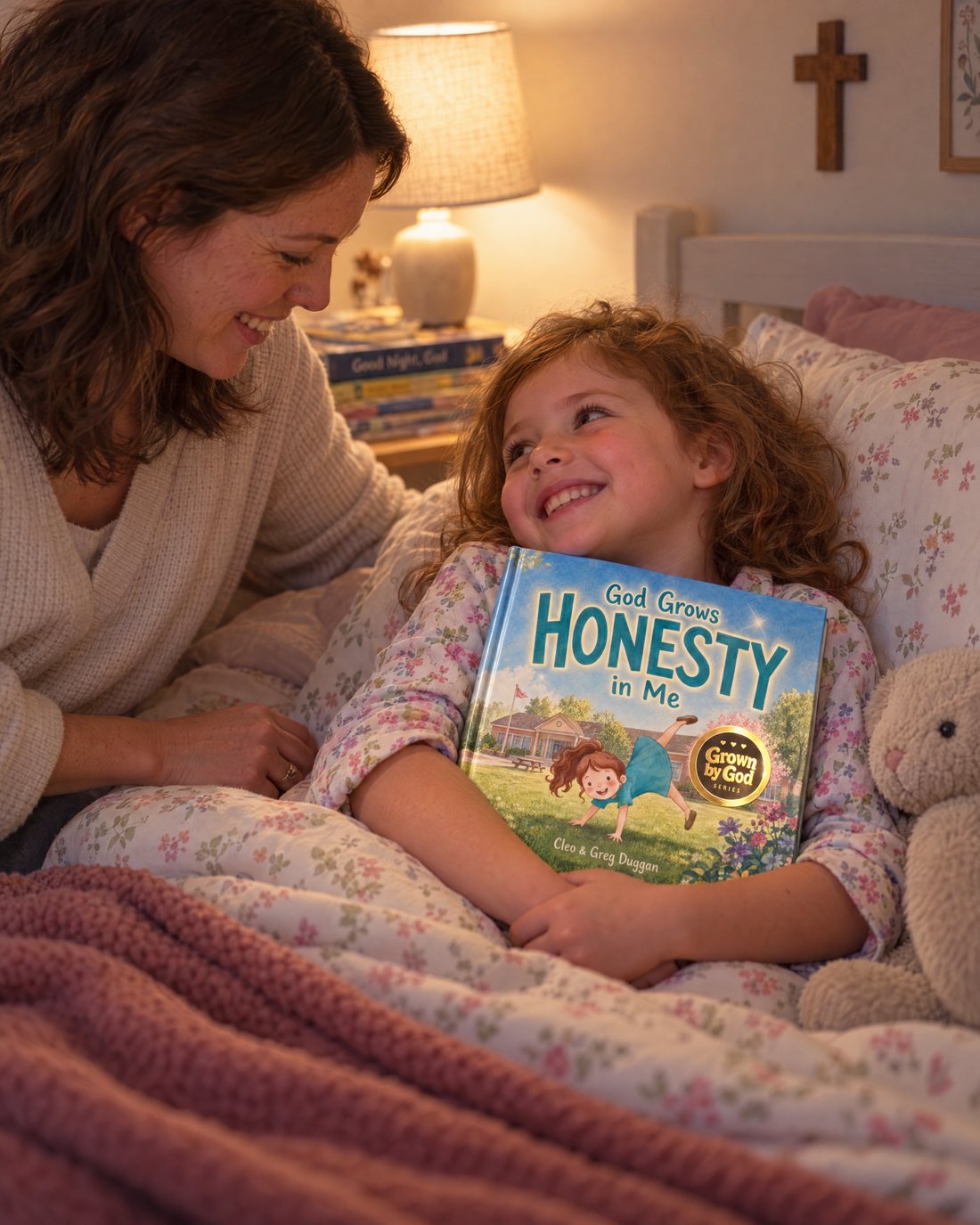
Young children don't learn character from definitions. Tell a four-year-old that "forgiveness means letting go of a wrong" and you'll get a blank look. Read them a story about a boy whose best friend goes off to play with someone else, and who has to decide what to do with his hurt when she comes back to say sorry, and they understand.
Stories are how young children make sense of the world, and they're how Jesus taught too. Here's a simple way to use stories to teach virtues like forgiveness, honesty and courage at home.
1. Start with a moment they recognize
The best stories for young children begin somewhere familiar: a playground, a classroom, a swimming pool, a birthday. When a child sees another child get it wrong, whether that's telling a fib that grows too big or refusing to share, they can look at the problem without feeling scolded themselves.
2. Connect it to a Bible story
Once your child has felt the problem, a Bible story shows them what God is like in the middle of it. A child scared of the deep end can hear about Joshua's people stepping into the river before God made a way. A child who thinks a ruined garden is the end can hear about the stone rolled away on the third day. The Bible stops being a separate subject and becomes the answer to what just happened.
3. Give them one verse to keep
End with a single, short verse. You're not aiming for a lesson plan, just one line your child can repeat the next time the same situation comes up. "Truthful words last forever" is easy to remember when the temptation to fib comes back.
4. Ask questions, don't lecture
Questions let children do the thinking. Three good ones:
- A feelings question: "Why was Freddie upset?"
- A God question: "How do you think Jesus' friend felt when Jesus made him breakfast?"
- A this-week question: "Who can help you when forgiving someone feels hard?"
Don't worry about "right" answers. The conversation is the point.
5. Repeat, repeat, repeat
Children ask for the same book night after night for a reason. Each time through, they notice something new. Let them choose, and don't rush to the next lesson.
6. Notice it when it happens
When your child tells the truth even though it was hard, or cheers on a friend, name it: "That was brave, just like Cody." Linking real life back to the story is where character takes root.
A simple bedtime routine
- Read the story (10 minutes)
- Say the memory verse together, twice
- Pick one question to talk about
- Pray about it in one or two sentences
That's it. Fifteen minutes, most nights, and over a year your child will have heard dozens of Bible stories tied to their own life.
Books built on this pattern
We wrote The Growing Heart Collection around exactly this shape. It's a boxed set of nine hardcover Christian picture books for ages 3 and up, covering forgiveness, honesty, humility, gratitude, compassion, generosity, hope and courage, plus a Christmas special about letting your light shine. Every book pairs an everyday moment with a Bible story, a memory verse from the NIrV and three questions to share, printed on the back cover so they're always within reach.
Cleo and Greg Duggan write the Grown by God series of Christian picture books. See the Growing Heart Collection.